Hand-Held Metal Detectors and School Security
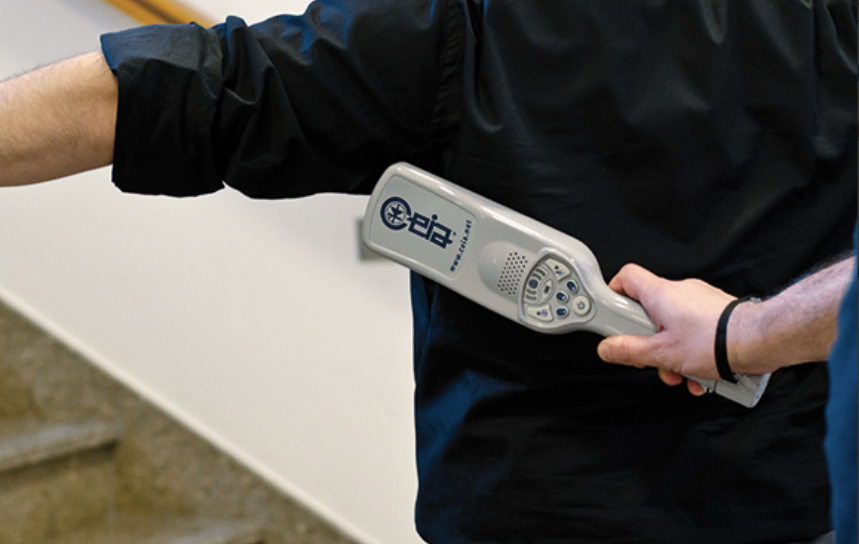
Hand-held metal detectors are an effective security tool and play an important role in school safety. Their strength lies in secondary screening and targeted searches.
In school environments, hand held detectors are especially valuable when an alert from a weapon detection system needs to be resolved or when staff are screening a specific individual or area. They allow security teams to quickly pinpoint the source of metal and make informed decisions without disrupting the broader flow of students.
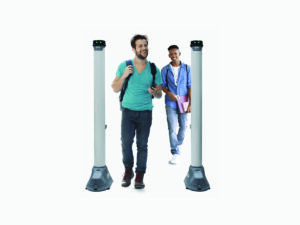
Primary weapon detection benefits from a different focus, where first screening must be fast, consistent, and repeatable. This is especially important during high-traffic moments such as arrival, class transitions, or school events. Weapon detection systems are well-suited for this role, providing reliable screening without slowing movement or relying on individual judgment.
Hand-held detectors support this process by performing secondary checks when an alert occurs. By focusing hand-held use on pinpointing the source of an alert, schools can avoid unnecessary scans, reduce assumptions, and limit human error, ensuring each tool is used for what it does best while supporting daily school operations.
Using hand-held detectors exclusively for long periods can also lead to screener fatigue. Repetitive screening motions, sustained concentration, and high screening volumes can make consistency harder to maintain over time. Reserving hand-held detectors for targeted, secondary screening helps reduce fatigue and supports more reliable, consistent security screening.
From the field perspective, Matt Samels, Regional Sales Manager at CEIA USA, explains how hand wands work with the OPENGATE weapon detection system:
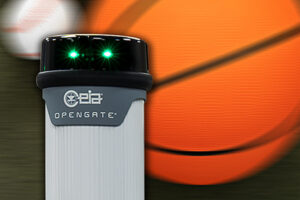
“Our hand-held detectors are excellent security tools, but they are best used for secondary screening and searches. A common example is during pop-up screening situations. OPENGATE allows schools to quickly set up screening outside a classroom and efficiently screen students who are separated from their bags. If an alert occurs while passing through OPENGATE, a hand-held can be used to resolve it, rather than attempting to wand every student. Wanding every individual increases the risk of human error and relies heavily on assumptions, such as assuming an alert is caused by a belt or another everyday item.”
Solutions like OPENGATE allow schools to conduct efficient first-pass screening while keeping hand-held detectors available for targeted, pinpointed secondary screening. Used together, these tools support effective weapon detection while maintaining day-to-day school operations.
Gallery